Finding the Missing Piece: Rights, Voice, and ‘Playful Connections’

Play is a huge part of early communication, but for young children with Additional Support Needs, connecting can sometimes feel like a puzzle. Parents, carers, and practitioners often wonder: How do I join in without causing stress? How do I know if they want me there?

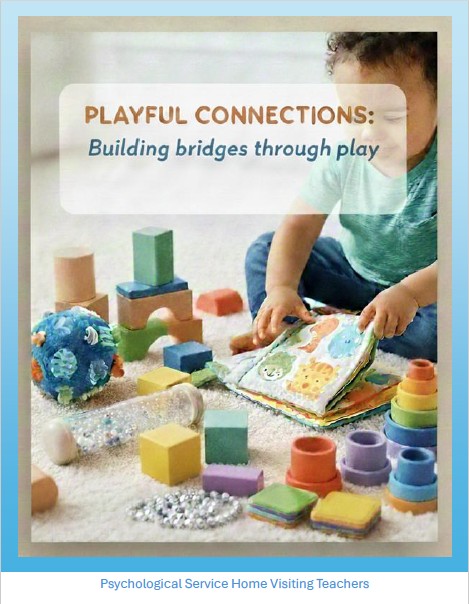
To help, the Psychological Service Home Visiting Teachers have created a new booklet: Playful Connections. It shifts the focus away from structured play to focus on what truly matters: building meaningful, joyful relationships.

Honouring Children’s Rights & Voice

At the heart of Playful Connections is a deep commitment to the UNCRC: the right to play, and the right to have choices and feelings respected.

For children with complex communication needs, “voice” is expressed through body language, facial expressions, and sounds. The booklet explores two vital concepts to honour this autonomy:

  • Assent (Saying “Yes” with actions): Reading the subtle, non-verbal cues that show a child is happily engaged and wants us to join in.
  • Consent (Respecting boundaries): Recognising when a child is signaling “not right now” or “I need space,” and safely seeking permission without overwhelming them.

By tuning into these signals, we show children that their choices matter, laying a secure foundation for trust and self-advocacy.

    There is no single “right” way to play. We hope this resource gives you the confidence to slow down, notice the small signals, and build gentle bridges of connection.

    This booklet can be found within the Families or the Practitioner sections of the Blog.

    Transition into Early Learning and Childcare.

    January sees another group of “freshers” starting in our Early Learning and Childcare (ELC) settings. This can be an exciting and yet nervous step for both the children and their parents/carers.

    Successful transitions often need good planning. This is especially the case if the child has additional support needs. Within the blog we have a range of tools and information which can be used to support enhanced transitions. These sit nicely alongside the ‘Being Me!’ documents already in place in ELC settings. These tools cover many different topics. They include timescales and the benefits of planning in partnership with parents/carers, and communication between home and the setting.

    Take a look at the supporting documents within the “Preparing for change – transitions” page.  

    Play Steps – UPDATED

    Play Steps takes a closer look at different types of play demonstrated by children in activities commonly found in Early Learning and Childcare settings.  The sections are designed to be used independently focusing on the interests of the child or the areas where specific needs have been identified. 

    The updated version and more guidance can be found using the following link.

    Play Steps

    Understanding Children from Armed Forces Families: EARLY YEARS

    What is it like being a young child from an Armed Forces family? One where your mum or dad, or an older brother or sister, might be serving, a reservist or a veteran? You’ve certainly learned a lot of things already in life – how to manage what seem like sudden partings, long times without them, wondering how they are. Or moving from place to place, each one fine but slightly different to the last. What might you want from your Early Learning and Childcare setting? Of course, it is the small things that make the difference, the listening and understanding, working with families and children. This new resource for early years will tell you what it is like and how to help, as well as the wealth of learning armed forces families can bring to a setting. It is one in ten families in the country so well worth finding out.

    Dr James McTaggart, Early Years Educational Psychologist, Highland Council

    A resource that provides an overview for Managers, Educators and Practitioners – to access visit the Learning and Knowledge Hub on the Armed Forces Families Highland website or click the image below to view the interactive book.