Blog posts

Moving day for the Psychological Service

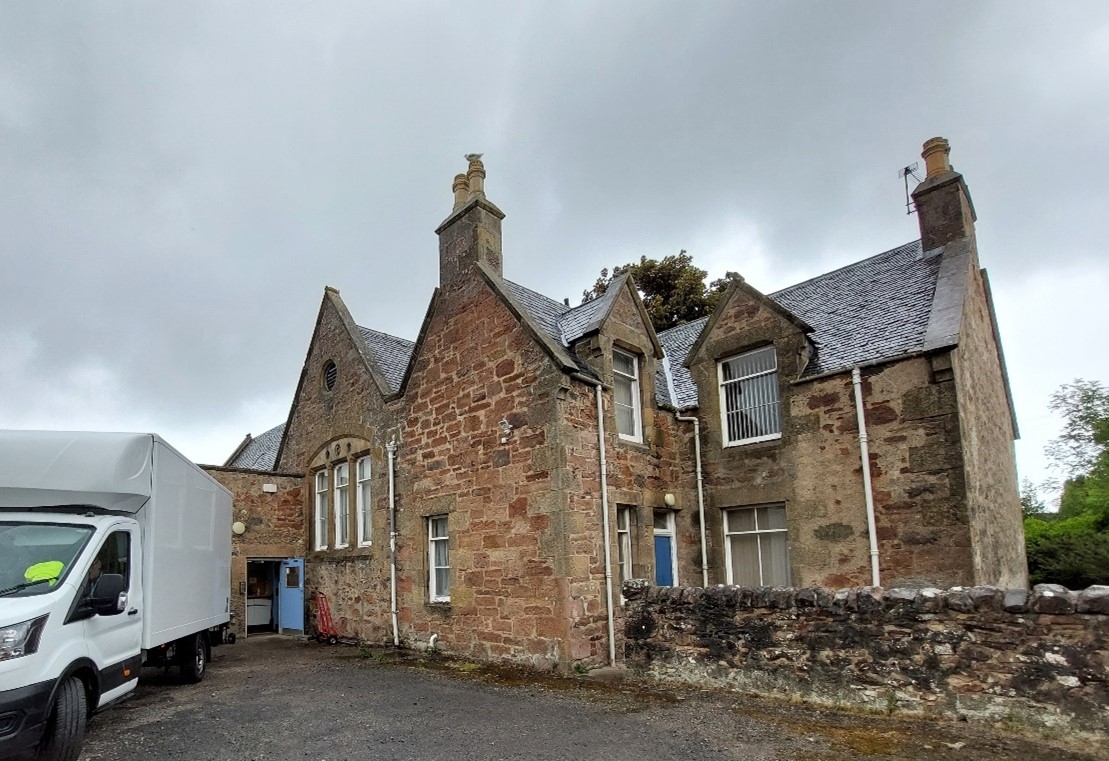
Photo of Culcabock by Helen O’Donohue

Since the 1970’s the Psychological Service ‘headquarters’ has resided in Culcabock, the old primary school on Culcabock Avenue in Inverness. Many of you will have spent time in the big meeting room for training events. We have now moved to Ness House (next to Drummond School) in Inverness.

Our email address continues to be highlandcouncilpsychologicalservice@highland.gov.uk

If you need to post anything, please use this new postal address; Ness House, Upper Floor, Drummond Road, Inverness, IV2 4NZ.

Transition into Early Learning and Childcare.

January sees another group of “freshers” starting in our Early Learning and Childcare (ELC) settings. This can be an exciting and yet nervous step for both the children and their parents/carers.

Successful transitions often need good planning. This is especially the case if the child has additional support needs. Within the blog we have a range of tools and information which can be used to support enhanced transitions. These sit nicely alongside the ‘Being Me!’ documents already in place in ELC settings. These tools cover many different topics. They include timescales and the benefits of planning in partnership with parents/carers, and communication between home and the setting.

Take a look at the supporting documents within the “Preparing for change – transitions” page.  

Play Steps – UPDATED

Play Steps takes a closer look at different types of play demonstrated by children in activities commonly found in Early Learning and Childcare settings.  The sections are designed to be used independently focusing on the interests of the child or the areas where specific needs have been identified. 

The updated version and more guidance can be found using the following link.

Play Steps

From Anxiety to Hope and Action

Exploring Global Issues with Learners

On the February In-service day 2024, Highland One World (HOW) facilitated a session supporting school staff to consider how to support children and young people to move from ‘Anxiety to Hope and Action’. The session was jointly created by HOW and the Highland Psychological Service, who had gathered information from young people across Highland, that indicated a high level of concern about a range of ‘world events’ and how children were impacted by media reports about these issues. The session considered with practitioners the world events that are causing anxiety for many pupils – climate change, war, political disruption etc. The session looked at why these issues cause anxiety in some children and gave very practical examples of how children can be supported by the adults around them to take control of the things they can and to take positive action to address some of the issues in a way that reduces the negative impact on them personally. This session has been distilled to a one hour recording that provides accessible, helpful information to any practitioner working with children and young people in this very important area. This session can be accessed here:

From Anxiety to Hope and Action

Additional information and a range of resources to support with similar issues can be found at highlandoneworld.org.uk

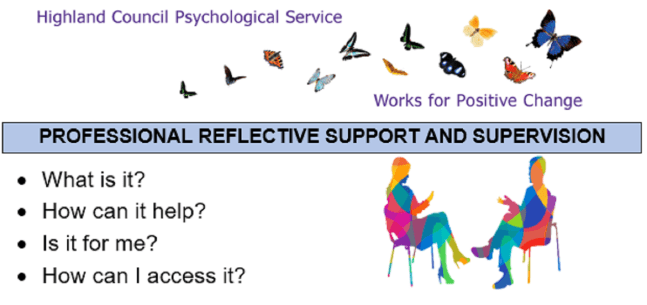
Professional Reflective Supervision for Highland Head Teachers

Many professional groups who work with children and young people receive regular professional supervision to support their safe practice and create a space for reflection and growth (Hawkins & Shohet, 2006).

Within the context of local authority schools however supervision is rarely provided as a matter of course to senior managers (Lawrence, 2020).

A research project has been completed recently in Highland with a small group of Head Teachers. They were involved in co-creating a framework for a supervision process and then engaged with this process over a number of months.

Feedback from the Head Teachers, following their engagement in this research, was very positive and as a result it has been agreed to continue to offer reflective professional supervision to a wider range of practitioners.

Further information is detailed in this leaflet. If you would like to be paired up with an Educational Psychologist and engage with this offer, please get in touch with bernadette.cairns@highland.gov.uk

Planning for Christmas

Christmas can be fun and exciting for children and young people, but for those with additional support needs it’s a season that might bring additional challenges. Whether or not you and your family celebrate Christmas, its difficult to avoid the potential impact at home, in the community, and in our schools and nurseries.

It’s a time that can be confusing for children whose families do not celebrate Christmas. Some children live in a blended family or share their time between two households where family traditions and expectations can be different. Navigating all of this can be an added pressure for children with additional support needs.

For some practical ideas to support this have a look at the Planning for Christmas page.

My Rights to Wellbeing: a programme supporting resilience using a rights-led approach.​

My Rights to Wellbeing is a universal programme, to support the knowledge and understanding of children’s rights. The programme aims to encourage children to develop their emotional language and promotes an understanding of themselves and their social relationships, both within their families and their wider communities.

For more information please see My Rights to Wellbeing.

Creating a sensitive classroom environment

Just a reminder of this great presentation from Sharon Morris, Children’s Occupational Therapist in Highland.

This evidenced based approach contains practical adjustments to ensure the classroom environment can support all children, including those with neurodevelopmental differences. These resources are presented as a video and an accompanying handout developed within Highland Council Children’s Occupational Therapy Service.

Environmental Classroom – YouTube

Environmental Classroom Handout