Transition into Early Learning and Childcare.

January sees another group of “freshers” starting in our Early Learning and Childcare (ELC) settings. This can be an exciting and yet nervous step for both the children and their parents/carers.

Successful transitions often need good planning. This is especially the case if the child has additional support needs. Within the blog we have a range of tools and information which can be used to support enhanced transitions. These sit nicely alongside the ‘Being Me!’ documents already in place in ELC settings. These tools cover many different topics. They include timescales and the benefits of planning in partnership with parents/carers, and communication between home and the setting.

Take a look at the supporting documents within the “Preparing for change – transitions” page.  

Planning for Christmas

Christmas can be fun and exciting for children and young people, but for those with additional support needs it’s a season that might bring additional challenges. Whether or not you and your family celebrate Christmas, its difficult to avoid the potential impact at home, in the community, and in our schools and nurseries.

It’s a time that can be confusing for children whose families do not celebrate Christmas. Some children live in a blended family or share their time between two households where family traditions and expectations can be different. Navigating all of this can be an added pressure for children with additional support needs.

For some practical ideas to support this have a look at the Planning for Christmas page.

Position statement on literacy development in children and young people

Over the past few years, the Psychological Service has been working with Highland’s Literacy Development Officer to develop ‘Literacy for All in a World of Diversity.’ Grounded in current research and government recommendations, ‘Literacy for All in a World of Diversity’ sets out a pathway for supporting the learning and teaching of literacy for all children, built around The ‘Three Wave Model’ for assessment and differentiated teaching. 

For more information please read our updated position paper.

Gathering children and young people’s views on their ideal service

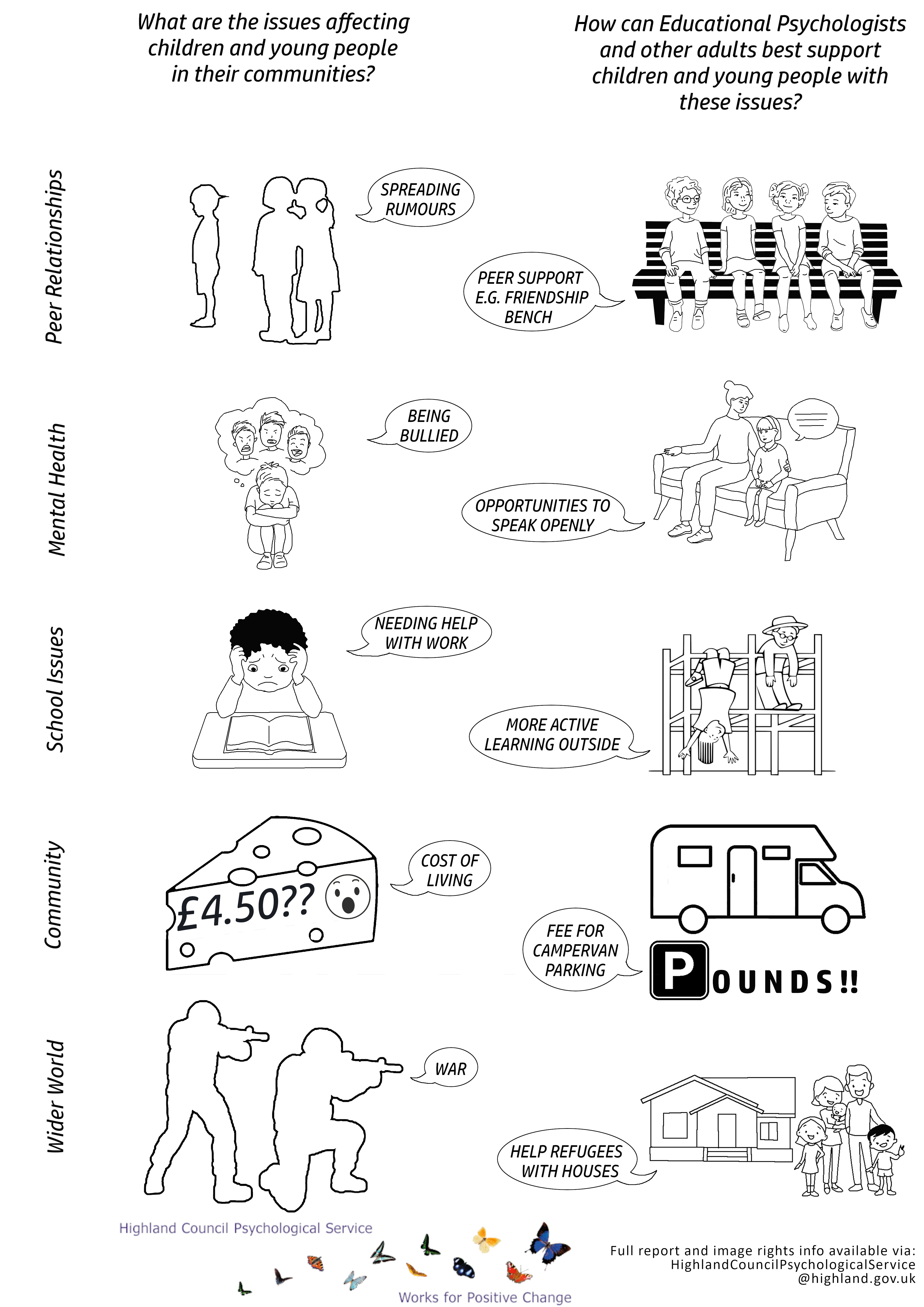
Highland Council Psychological Service regularly gathers feedback from stakeholders as part of their self-evaluation processes. Pupil focus groups were facilitated by members of the Psychological Service, to gather primary and secondary school children and young people’s views – to help inform and shape future service delivery. Eight focus groups were carried out face-to-face in schools and a youth group setting.

Children and Young People Infographics

Secondary School

Primary School

Click here to find out more about the project, summary, key questions, and to access the full report.

Understanding Children from Armed Forces Families: EARLY YEARS

What is it like being a young child from an Armed Forces family? One where your mum or dad, or an older brother or sister, might be serving, a reservist or a veteran? You’ve certainly learned a lot of things already in life – how to manage what seem like sudden partings, long times without them, wondering how they are. Or moving from place to place, each one fine but slightly different to the last. What might you want from your Early Learning and Childcare setting? Of course, it is the small things that make the difference, the listening and understanding, working with families and children. This new resource for early years will tell you what it is like and how to help, as well as the wealth of learning armed forces families can bring to a setting. It is one in ten families in the country so well worth finding out.

Dr James McTaggart, Early Years Educational Psychologist, Highland Council

A resource that provides an overview for Managers, Educators and Practitioners – to access visit the Learning and Knowledge Hub on the Armed Forces Families Highland website or click the image below to view the interactive book.

NEW ARMED FORCES FAMILIES HIGHLAND WEBSITE

Launch of NEW ARMED FORCES FAMILIES HIGHLAND WEBSITE along with a quick and fast access QR code for mobile users.

This website aims to provide easy navigation, key information, helpful resources and learning materials all at the click of a button for our Armed Forces Families, their Children and Young People and the Education Practitioners who work with them. We’ve had some great feedback already, “It is well laid out, easy to navigate and provides all the information required” ….  “This is a brilliant resource – intuitive and engaging” … “The website is fantastic – what an amazing resource”.

The Military Liaison Group (Education) is a Highland partnership that is committed to ensure that all Children and Young People from Armed Forces families thrive in Highland and suffer no disadvantage in their education due to being from a military family whether Serving, Reservist or Veteran.

We hope you enjoy exploring the website and there is an option to ‘subscribe’ – a great way to keep up to date with new information and resources that we post.

SAVE THIS WEBSITE:

https://armedforcesfamilieshighland.wordpress.com/

SAVE THIS QR CODE for mobile users:

Please PRINT, SHARE and DISPLAY this FLYER to support the launch

Universal toolkit for listening to children

This practical resource pack was collated by a multi-agency group working in Highland, to help elicit children and young people’s views and participation in the things that matter most to them. Participants in the group included: Highland Council Psychological Service, Early Years Education Support Officer, Allied Health Professionals, NHS, Social Work, and linking with third sector partners. Within the context of children’s rights legislation, this toolkit provides guidance on how best to elicit and include children’s views in their plans.

Listening to children – a universal toolkit

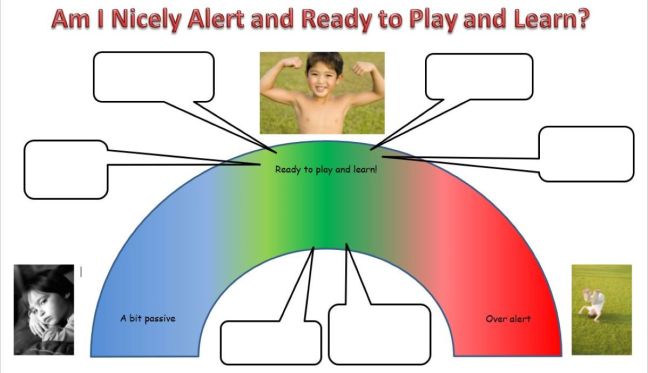
Towards self-regulation: a refresh of our resources

As adults we learn how to self-regulate but children need to learn their own strategies and we can help them by labelling the ones they have and trying out others to see which ones work best for them.

We have refreshed our resources within EASEYS for ASN Towards self-regulation. These now include some samples and templates as well as a refreshed set of self-regulation cards to help you personalise the support you provide for individual children.

Planning for Christmas

The run up to Christmas looks different for everyone. For some children and young people there can be challenges that might benefit from extra planning. For some ideas have a look at the Planning for Christmas page within the Supporting Families section of this Blog.

The Pines, Neurodevelopmental Support Centre for Highland, based in Inverness is holding a coffee morning for parents, carers and professionals to share strategies which might help.

Christmas Coffee Morning – Strategies for Christmas

Thursday, December 2, 2021 from 10:30 AM  12:00 PM

“Christmas can be a very stressful time for families and having some strategies to support your young person might help. Shona MacPherson from the Pines Speech & Language Therapy team has lots of ideas!”

An exploration around peer support for secondary pupils in Scotland with experience of self-harm

This paper (written by Victoria Shepherd, an Educational Psychologist working in Highland) shares research carried out within Scotland exploring peer support for secondary pupils with experience of self-harm. It is widely suggested that friends are a main source of support for young people who self-harm, yet limited research explores specific supports offered by friends, or any help required to provide successful support. Qualitative data were gathered from secondary pupils via semi-structured interviews. Findings indicated that friends provide support by being directly there for young people, providing distractions and taking responsibility. Friends could consider young people’s perspectives more, initiate conversations about self-harm and spend more time with young people. Supportive friends speak to others for reassurance and would like additional people to provide support. Implications for practice included highlighting support provided by friends, normalising the term ‘self-harm’ and providing peer support training for friends.